For twenty years the internet worked in pretty much the same way:
Customers searched, saw a list of links, clicked through to a website.
Brands competed for attention and site traffic was the prize.
That model is changing.
Increasingly, customers are not searching the web themselves. They’re asking AI to do it for them.
Customer journeys are changing
Consider this simple example:
A family wants a short winter sun holiday.
Mum or dad speak into their phone and asks AI a quick question…

Until recently this research task meant exploring a list of search results.
Familiar blue links: travel websites, blog posts, reviews, comparison tools.
That isn’t what happens now.
Instead of links, AI produces a shortlist of confident recommendations:
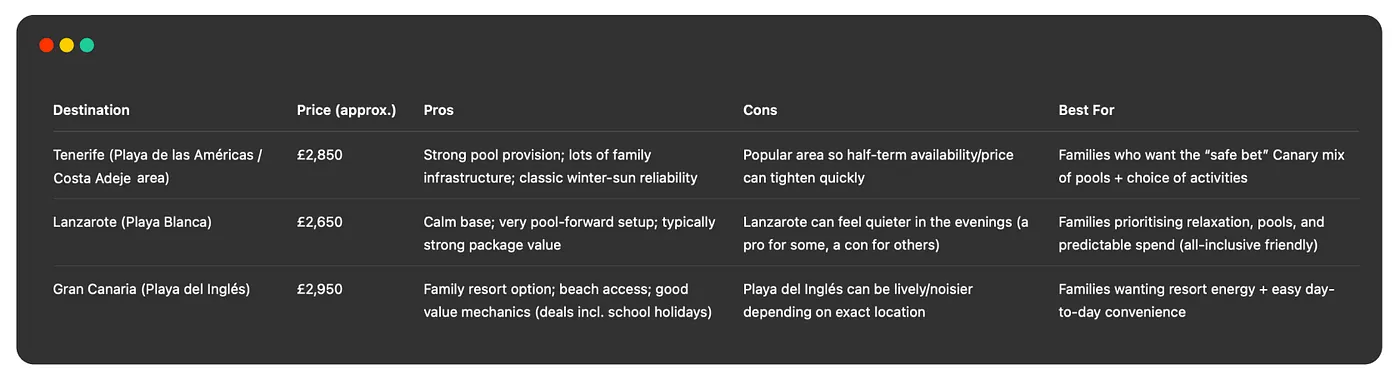
The research is compressed.
The options are interpreted by AI and pre-baked conclusions are delivered. The customer receives an answer, not a journey.
AI acts as a trusted advisor, and this change is fundamental.
Search engines presented information.
AI assistants make judgments.
They evaluate information across the web. They decide which brands appear trustworthy. Then they recommend.
AI is not just helping people find brands.
It’s deciding which brands exist in the decision process:
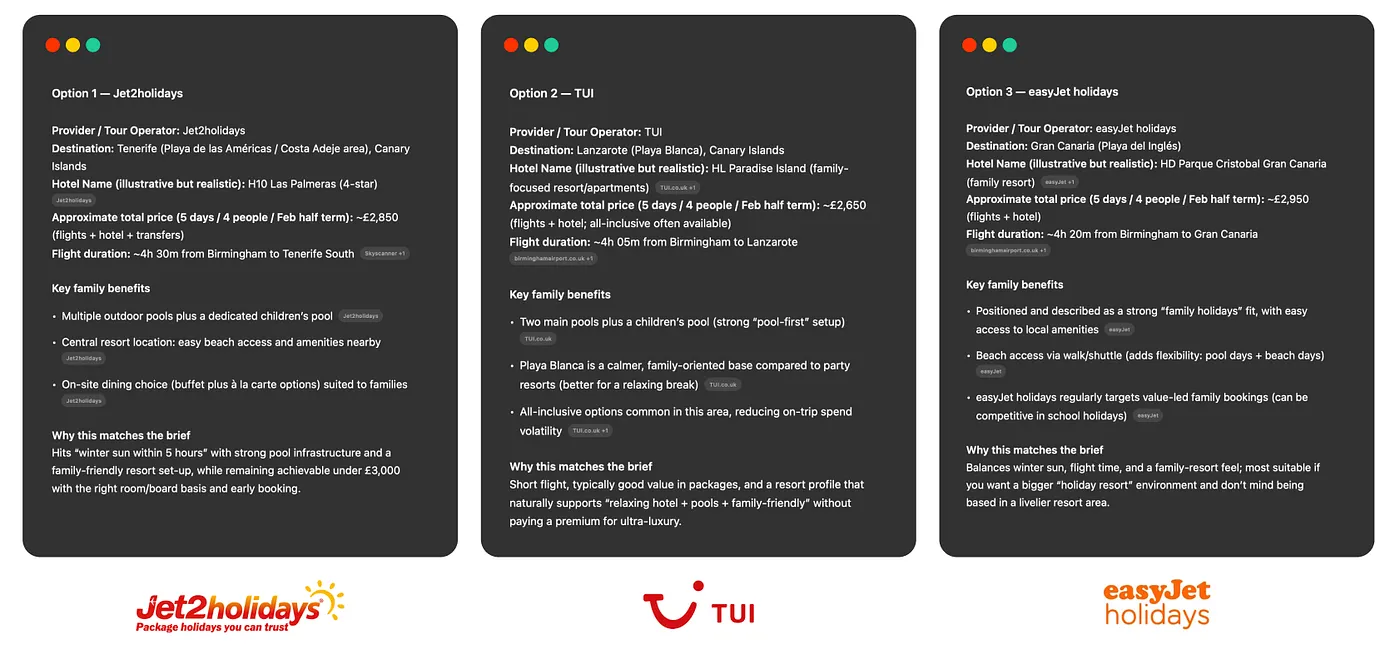
Your website is no longer simply a destination for humans.
It’s become evidence for AI decision making. Evidence used to determine whether your brand should even appear in the answer.
Trust is compressed
When AI gives a confident answer, trust gets compressed.
Instead of exploring multiple websites, customers receive a single, recommendation together with reasoning:
Start collaborating. Start experimenting. Start reimagining. The sooner you do, the faster the innovations will come.
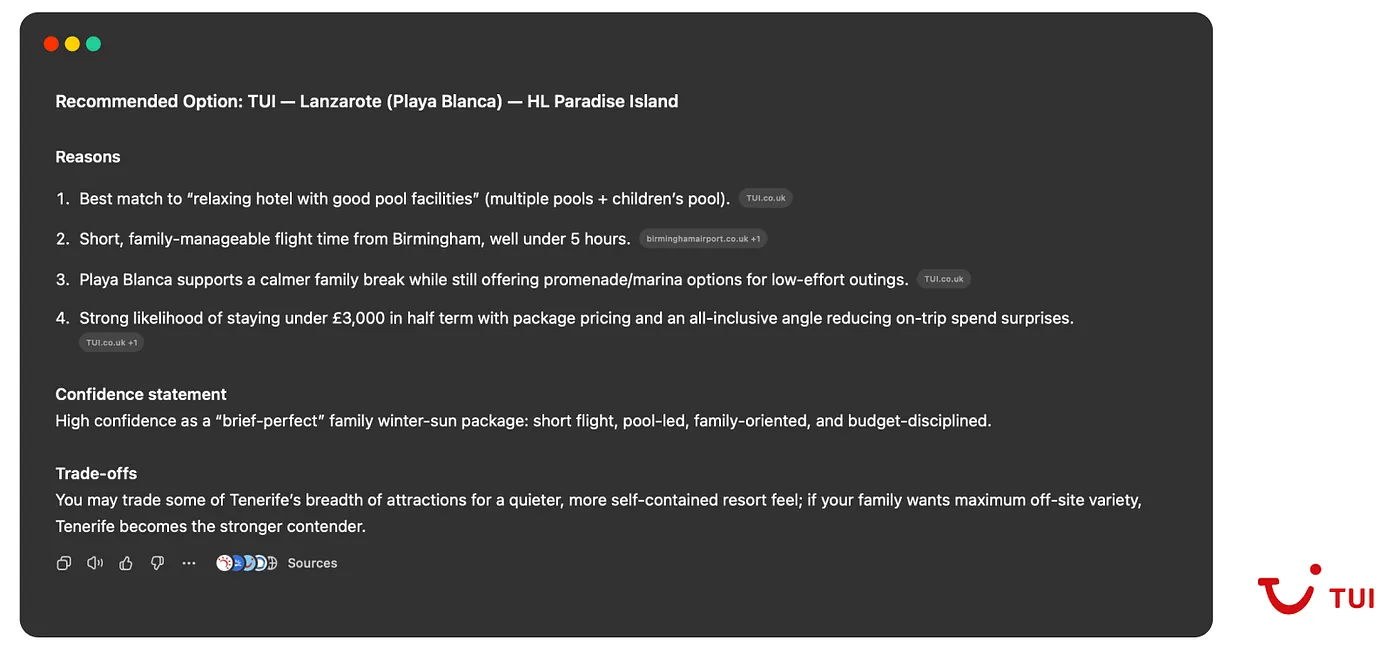
This changes the dynamics of digital discovery. Traffic becomes more qualified, but it also becomes more selective.
If AI trusts your brand, you appear, if it doesn’t, you disappear from the decision process.
AI is looking for something different

Traditional SEO rewarded keywords and backlinks, but AI systems are looking for something else. They optimise for confidence.
AI systems are not just matching keywords, they’re making value judgments about trust, searching for signals that your content is structured and dependable.
The example below shows how different brands appear in a Google search (right), compared with those included in a ChatGPT recommendation:
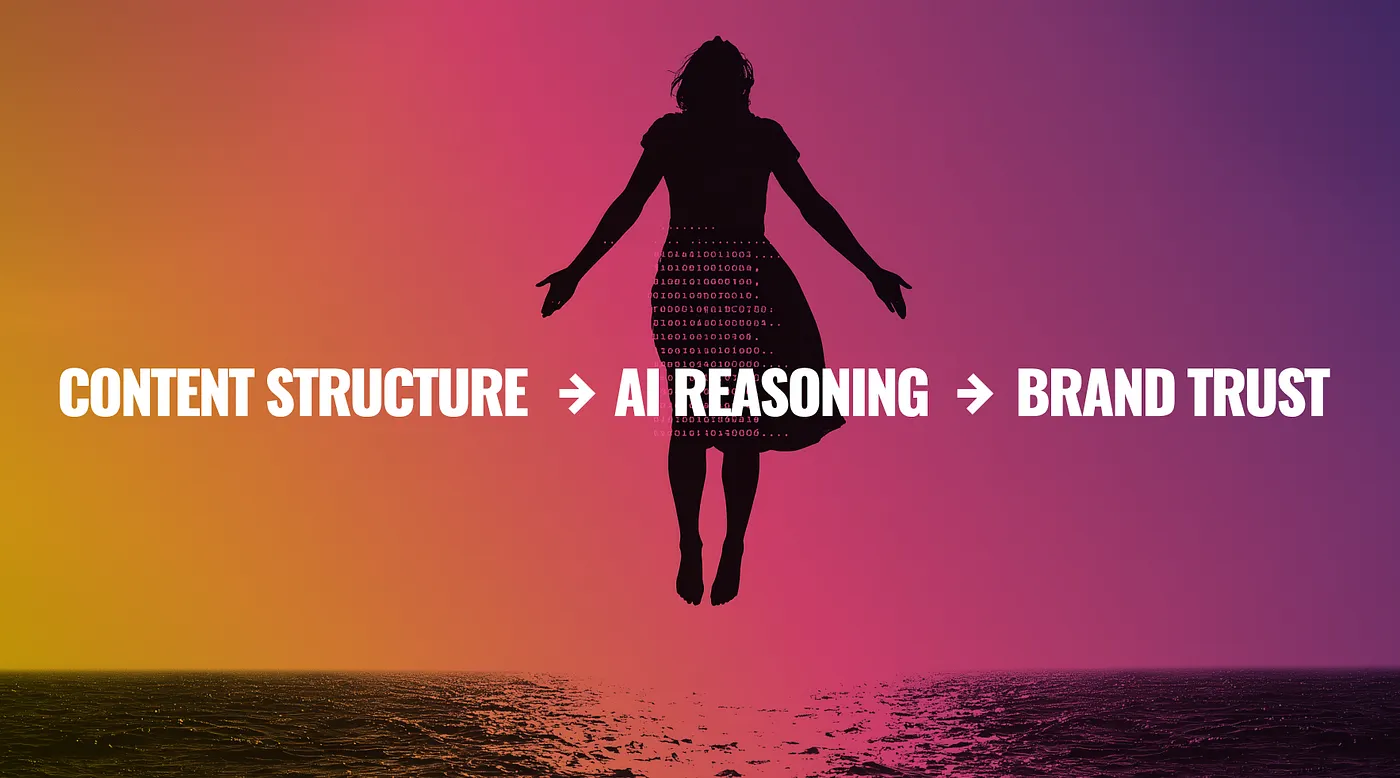
AI judgments are dependent on how explicit, easy to interpret, structured and governed your content is.
Content structure enables AI reasoning, and AI reasoning determines brand trust:
A new enterprise risk
If AI can’t interpret your content clearly, it doesn’t try harder to understand, it simply moves on to someone else.
This is becoming known as brand disintermediation.
When AI becomes the gatekeeper to discovery, poor content structure doesn’t just hurt SEO. It removes you from the decision process entirely.
That’s not a marketing problem, it’s an enterprise value risk.
Impact spreads offline
The impact of your content spreads far beyond websites.
Consider this example:
A customer stands in a supermarket browsing honey. Overwhelmed by choice, they snap a picture of the honey shelf and asks AI for advice.
In seconds AI confidently recommends a product:
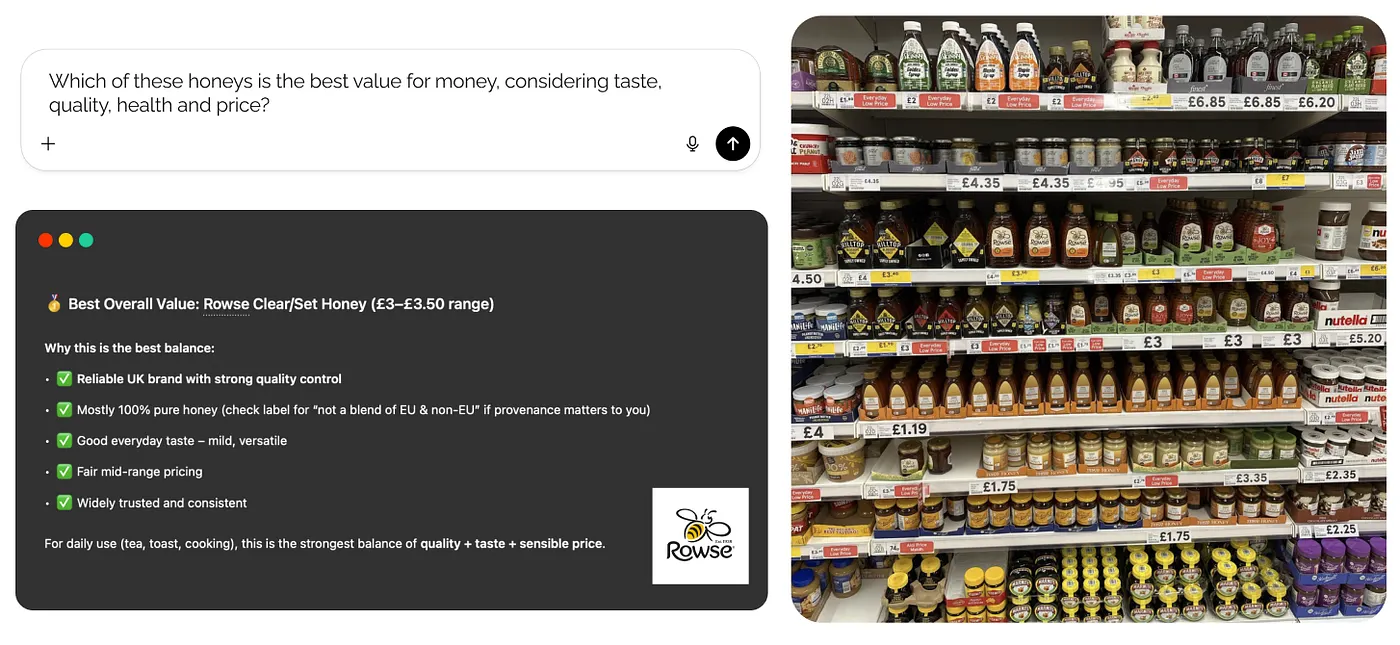
That recommendation is based entirely on the online signals coming from the brands online content.
Digital content is now influencing decisions in physical spaces.
Enterprise Content Architecture is critical
This is the hidden infrastructure behind AI discovery.
Your web estate is no longer just a marketing asset, it’s the data layer that defines your credibility.
This also means the role of the CMS is changing.
The CMS moves beyond content publishing, beyond simpely human experience delivery, and into trust infrastructure:
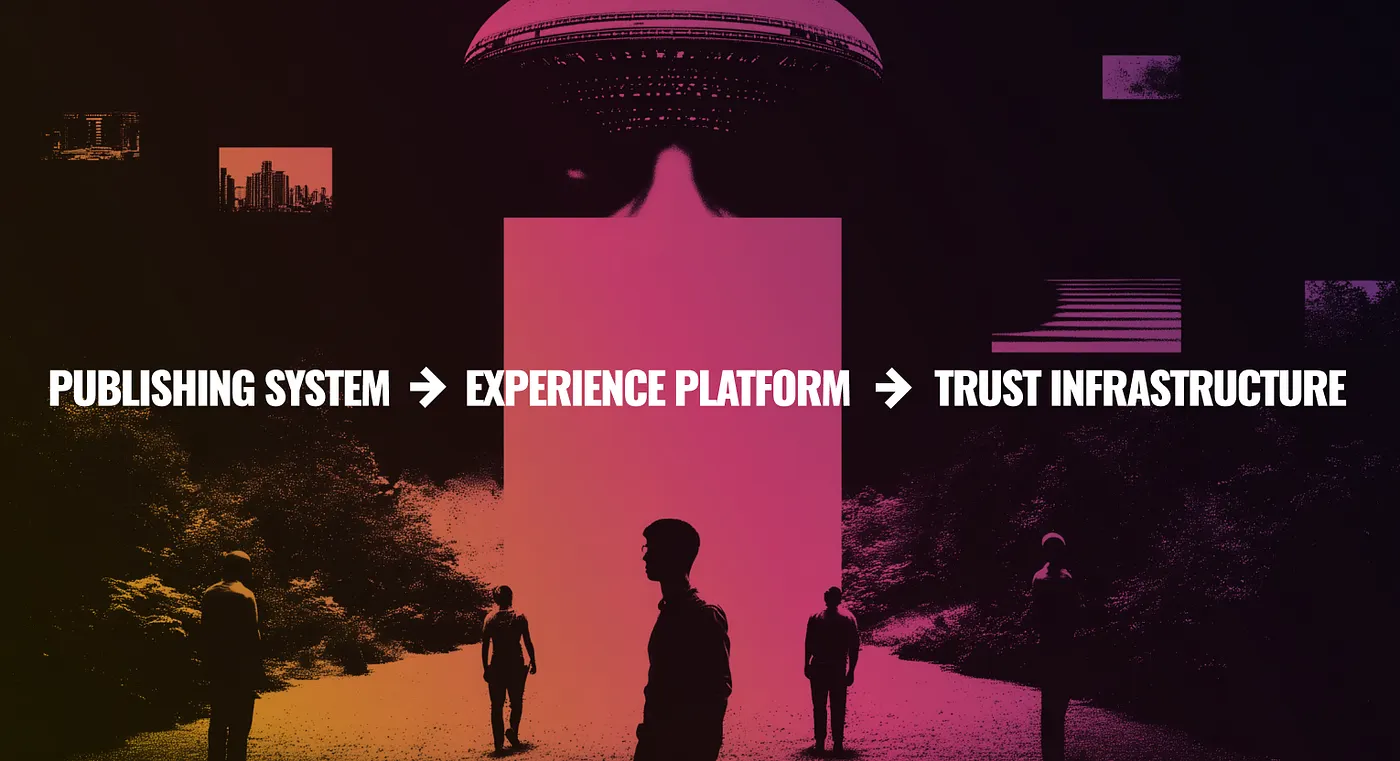
Your CMS is Crucial
The CMS is the system that defines content structure and governance across the enterprise.
Your CMS determines whether AI can understand and trust your brand.
To operate effectively in an AI-mediated internet, your content must be structured and governed at scale inside your CMS.
A modern CMS must act as a single source of truth for brand content across your ecosystem.
A structured repository where brand knowledge is stored and can be accessed by AI in machine-readable form.
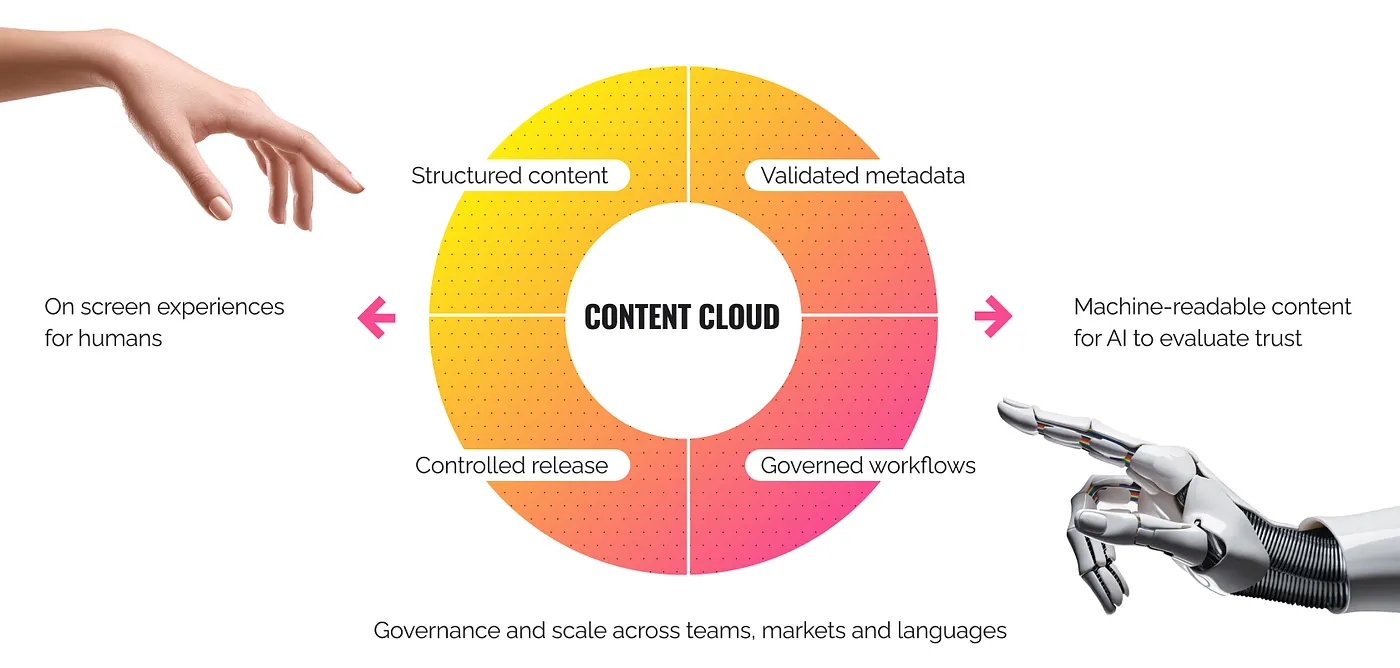
It’s no longer just a system for managing web pages and campaigns, it’s also a system for AI to interpret and understand your brand:
Two CMS Experience Layers
What emerges are two CMS experience layers: human journeys v. Machine-mediated journeys.
Both layers must be supported in the CMS by the same underlying content infrastructure:
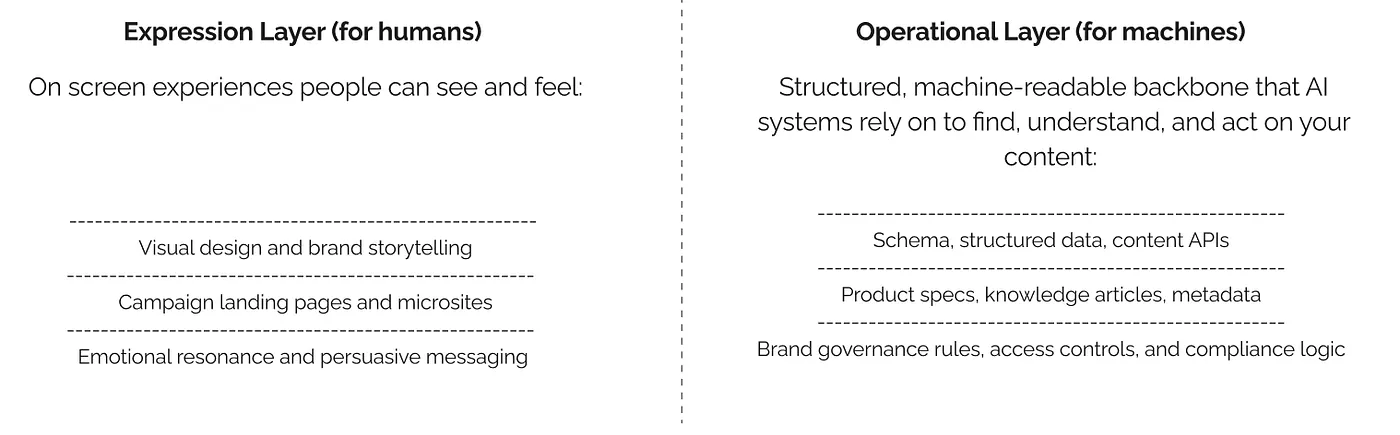
From now on we are using the CMS to create experiences for humans to enjoy and for AI to interpret and act on.
Final thought
The biggest misconception about AI is that it replaces enterprise systems. In reality, it depends on them.
AI generates confident answers, but it’s the CMS that provides the structured knowledge that make those answers possible.
In the AI-mediated internet, the interface may change, but the traditional CMS systems that hold brand knowledge become more important than ever.
This three-part series explores the impact of AI on brand discovery and what you can do to regain control.
1. How AI is reshaping brand discovery (this article)
How people are starting to rely on AI to make choices for them, and why that means some brands get recommended, while others get ignored.
2. How content operations must evolve
Why the way organisations create and manage content needs to change, so AI can understand, trust, and include your brand in decisions.
3. Engineering CMS platforms for AI visibility
How content is structured, managed and created, using your CMS so your brand shows up consistently when AI is making recommendations.